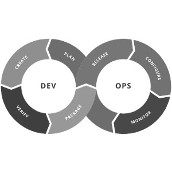

Dev-Ops is a methodology aimed to speed-up application development and release aimed at promoting

  • fast development methodologies – Development teams
  • fast quality assurance methodologies – QA teams
  • fast deployment methodologies – System Operators teams
  • iteration and continuous feedback – Project Management teams

The aim is to achieve a faster time to market.

DevOps inherits Agile methods such as SCRUM Project Management, but it is more focused on the tools necessary to achieve the goal. It is also possible to involve the Security delegating some rights to the other teams: this approach is called DevSecOps.

These tools Devops brings with it were previously confined into the development field only, such as Source Code Management tools like GIT, branching models such as GitFlow, Continuous Integration and Continuous Delivery tools such as Jenkins or Drone, schedulers such ad dKron, scanners for code quality and compliance such as SonarQube.

This means that professional of every fields, even system engineers and administrators, should have an understanding of these tools and models.

When dealing with environments that should meet security regulations it is very unlikely that systems have direct access to the Internet: they connect to the Internet by the means of a content proxy.

When dealing with the need of access the online Ansible Galaxy, you may think that creating the access rule on the corporate proxy is enough to sort things out, but it isn't: besides the poor performances due to the latency for downloading contents from the Internet, there's also the security concern that it is possible to upload contents to Ansible Galaxy using that proxy.

If you are working in an environment with sensitive data, this is a huge security risk that you can mitigate by using an on premise repository manager that mirrors the contents you need from the online Ansible Galaxy.

This post shows you how easily you can mirror a subset of the collections hosted onto the online Ansible Galaxy by using Pulp3 with the Ansible plugin.

Read more >

Pulp is the repository manager used by Katello (the upstream project of Red Hat Network Satellite server 6.x). This Pulp version is really exciting, since it comes with several plugins that let you host several kind of repositories:

  • generic files
  • software packages: RPM packages, Deb Packages and even Container Images
  • software modules: Python modules, Maven contents, Ruby Gem
  • contents configuration management software: Ansible roles and collections and Chef cookbooks

In this post I'll show you how easy it is to install Pulp3 as container using the official container image.

Read more >